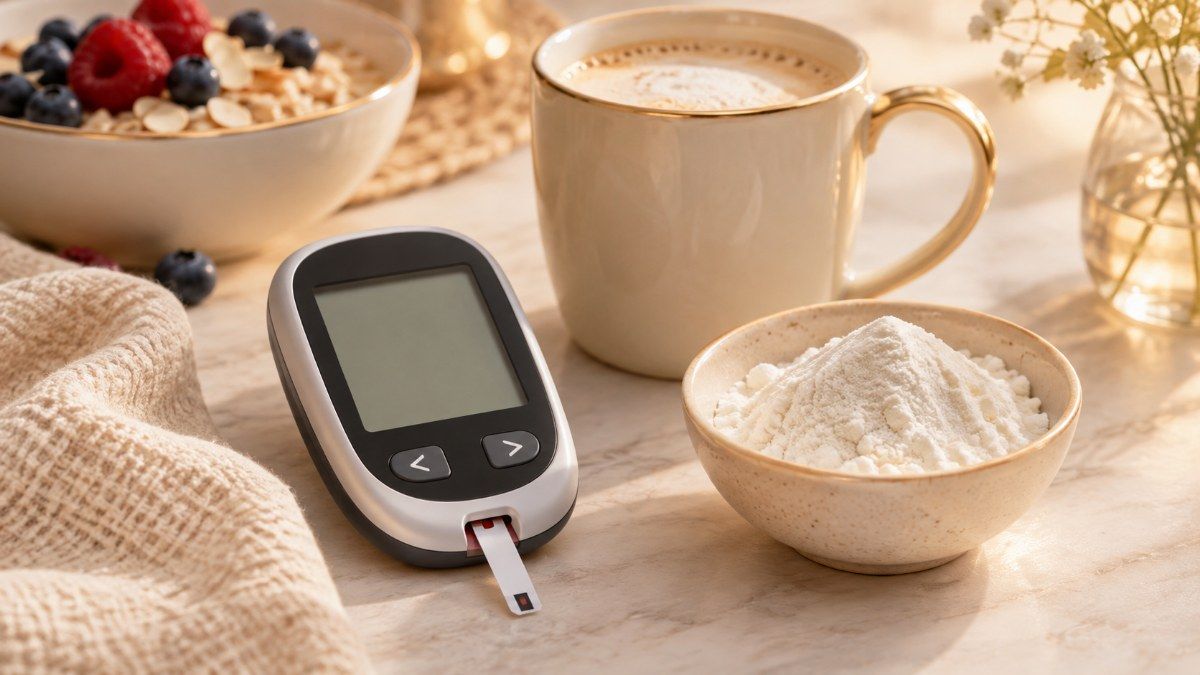
Collagen and Blood Sugar: Is Collagen Safe for Diabetes?
Plain collagen is unlikely to raise blood sugar. What small studies show, label checks, kidney limits, and what to ask your care team if you have diabetes.
Written by Dimitrun Irene. Updated November 10, 2026.
Plain collagen does not appear to raise blood sugar, and for most people with diabetes it is a reasonable protein to add, as long as the product has no added sugar and it fits your overall protein plan. Collagen is a protein with almost no carbohydrate, and in a small study, gelatin (cooked collagen) taken on its own did not raise blood glucose. A few small human trials go further and suggest collagen taken before a meal may blunt the rise in blood sugar after eating, but those trials are short, involve few people, and were mostly funded by collagen manufacturers, so they are not proof that collagen treats diabetes. The American Diabetes Association (ADA) does not recommend any supplement for blood sugar control. The practical questions are what else is in the product, whether you have kidney disease, and whether you take drugs that can cause low blood sugar.
Collagen and Blood Sugar: The Short Answer
- 1Plain collagen is almost carb-free; gelatin alone did not raise glucose in a small 2007 study.
- 2In a 2024 trial of 16 adults, 5 or 10 g of collagen before a meal lowered the after-meal glucose rise by about 40%; it was funded by the manufacturer.
- 3Longer trials in type 2 diabetes are small, industry-funded or hard to verify; none shows collagen can replace diabetes care.
- 4Collagen and glycine can modestly raise insulin; that is not the same as raising blood sugar.
- 5Check labels: added sugars, sweeteners and gummy bases matter more than the collagen itself.
- 6If you take insulin, a sulfonylurea or a GLP-1 drug, or have kidney disease, check with your care team first.
Does Collagen Raise Blood Sugar?
Not by itself, as far as the evidence shows. Collagen is a protein made largely of three amino acids, glycine, proline and hydroxyproline, and unflavored collagen peptides contain essentially no sugar or starch. In a 2007 study in 9 healthy men, 30 grams of gelatin taken alone did not raise blood glucose, although it did raise insulin. When the same men took the gelatin together with 50 grams of glucose, their blood sugar rose less than with glucose alone, and their stomachs emptied more slowly.
The variable is what is added. Flavored powders, drink mixes and especially gummies can contain sugar, fruit juice concentrates or starches, and these can raise blood sugar like any other sweet food. If you are wondering whether a scoop in your morning coffee interrupts fasting, see does collagen break a fast.
What Do Human Studies Show About Collagen and Glucose?
Only a handful of human studies exist, and each has real limits. The best-designed one is a 2024 randomized, double-blind, placebo-controlled crossover trial by Grasset and colleagues. Sixteen adults, 7 with normal blood sugar and 9 with prediabetes (blood sugar higher than normal but below the diabetes range), each tried three options on different days: 5 grams of a specific collagen hydrolysate, 10 grams of it, or a placebo, taken 30 minutes before a meal containing 75 grams of carbohydrate. Compared with placebo, the rise in blood glucose over the next three hours fell by 43% with 5 grams and 40% with 10 grams. In the prediabetes group it fell by 53% and 48%; in the normal group the change was not statistically significant. The larger dose did no better than the smaller one. It tested a single dose, not daily use, and was funded by the collagen maker Rousselot, which employed several authors.
A follow-up trial by the same company in 30 people, measuring insulin and gut hormones, is listed as completed, but as of November 2026 no results have been posted.
In people with type 2 diabetes, the evidence is weaker. A trial by Devasia and colleagues, published in 2018 (not 2020, as some websites state), randomized 60 adults already taking oral diabetes drugs to 10 grams a day of fish collagen peptides or a fiber comparator (resistant dextrin) for 12 weeks. Fasting glucose, HbA1c (a measure of average blood sugar over about three months) and insulin resistance improved in both groups. The claim that collagen did better is shown only in figures, and the participant numbers do not fully add up. The study was funded by Nitta Gelatin, and several authors worked for the company.
An older Chinese study, Zhu and colleagues (2010), is often cited. We could not read its primary abstract. According to a 2024 review, it gave 13 grams a day of marine collagen peptides for 3 months to people with type 2 diabetes and reported lower fasting glucose, triglycerides and free fatty acids and better insulin sensitivity.
Human studies of collagen, gelatin or glycine and blood sugar
Grasset 2024
Adults with normal glucose or prediabetes
16
5 g or 10 g once, 30 min before a 75 g-carb meal
After-meal glucose rise 43% (5 g) and 40% (10 g) lower than placebo; 53% and 48% lower in prediabetes
Funded by Rousselot; single dose; no human insulin data
Devasia 2018
Type 2 diabetes on oral drugs
60 enrolled
10 g/day fish collagen vs resistant dextrin, 12 weeks
Fasting glucose, HbA1c and insulin resistance improved in both groups
Funded by Nitta Gelatin; superiority shown in figures only; counts do not reconcile
Zhu 2010 (as reported in a 2024 review)
Type 2 diabetes
Not verified
13 g/day marine collagen, 3 months
Reported lower fasting glucose and better insulin sensitivity
Primary data not checked
Gannon 2002
Healthy adults
9
Glycine (1 mmol/kg lean mass) with 25 g glucose, single test
Glucose response cut by more than half
Glycine, not collagen; very small
Karamanlis 2007
Healthy men
9
30 g gelatin with 50 g glucose, single test
Lower glucose response; gelatin alone did not raise glucose
Large dose; healthy men only
Why Might Collagen Blunt a Blood Sugar Spike?
There are three proposed reasons. First, glycine: gelatin is about 30% glycine, and in a 2002 study of 9 healthy adults, adding glycine to a glucose drink cut the blood sugar response by more than half. Second, slower stomach emptying: in the 2007 gelatin study, food left the stomach more slowly when gelatin was added, so sugar reached the bloodstream more gradually. Third, gut hormones such as GLP-1, which helps release insulin and slows digestion. In the 2024 paper, the GLP-1 findings came from mice, not people. None of these effects has been shown to lower HbA1c over the long term in well-designed human trials.
Does Collagen Raise Insulin?
It can, modestly. In the 2007 study, gelatin alone raised insulin, and in the 2002 study glycine alone raised it slightly. Many proteins do this. A small insulin rise without a rise in glucose is not a blood sugar spike, and is not by itself a reason to avoid collagen. Human insulin results for the collagen used in the 2024 trial have not been published as of November 2026.
Is Collagen Safe for Diabetics on Insulin, Metformin or a GLP-1 Drug?
We found no studies of collagen taken alongside metformin, insulin, sulfonylureas (such as glipizide or glimepiride) or GLP-1 drugs such as semaglutide, so no one can say whether there is or is not an interaction. That gap matters most for people on insulin or sulfonylureas, because these drugs can cause low blood sugar (hypoglycemia), and anything that changes how fast food is absorbed could change your readings. GLP-1 drugs already slow the stomach, so discuss any added supplement with your prescriber.
- 1Tell your doctor, diabetes educator or pharmacist before you start, especially if you take insulin, a sulfonylurea or a GLP-1 drug.
- 2If you use a continuous glucose monitor (CGM) or fingerstick meter, check your readings more often for the first couple of weeks.
- 3Change one thing at a time so you can see what any change in readings is linked to.
- 4Do not lower or skip any diabetes medicine because you have started collagen.
What About Added Sugars, Sweeteners and Collagen Gummies?
We did not check specific brands, so this is label-reading advice. The ADA's 2026 Standards of Care say nonnutritive (zero-calorie) sweeteners can be used in place of sugar-sweetened products if consumed in moderation and for the short term. For a broader guide to label claims and testing, see how to choose collagen peptides and heavy metals in collagen.
Label check for collagen products if you have diabetes
Total carbohydrate
Nutrition or Supplement Facts panel
Close to 0 g per serving for plain powders; count any carbs in your meal plan
Added sugars
Nutrition Facts panel
0 g is ideal; gummies and flavored mixes often list several grams
Sweetener type
Ingredients list
Sugar alcohols (e.g. maltitol, erythritol), sucralose or stevia; sugar alcohols can still affect glucose and digestion
Protein per serving
Nutrition or Supplement Facts panel
Grams of collagen; studies used 5 to 13 g a day
Source and allergens
Ingredients list or front label
Bovine, marine (fish) or chicken; avoid marine collagen with fish allergy
Third-party testing
Label or company website
Independent testing seal or certificate of analysis
Source differences, including allergy considerations, are covered in marine vs bovine collagen.
Is Collagen OK With Diabetic Kidney Disease?
Possibly, but only within your protein plan. The ADA's 2026 Standards of Care say that in chronic kidney disease, reducing protein below the recommended daily allowance of 0.8 grams per kilogram of body weight is not recommended. Collagen should be counted toward your daily protein target rather than added on top; a 10 gram scoop is 10 grams of protein. Ask your nephrologist or a renal dietitian how it fits.
There is also a kidney stone question. Collagen contains hydroxyproline, which the body can turn into oxalate, a component of the most common kidney stones. In a 2006 study, a diet with 30 grams of gelatin raised urinary oxalate by 43% compared with whey protein; changes were seen with 5 to 10 gram gelatin loads but not 1 to 2 grams. If you have had calcium oxalate stones, read collagen and kidney stones and talk to your doctor before taking collagen daily.
Can Collagen Help Diabetic Wounds or Skin?
The evidence is thin. High blood sugar over time forms advanced glycation end products (AGEs), which stiffen collagen in skin and blood vessels, but taking collagen by mouth has not been shown to reverse this. We found no verified randomized trial of oral collagen for healing diabetic foot ulcers. The closest large trial, in 270 people with diabetic foot ulcers, tested a drink of arginine, glutamine and HMB (not collagen) and found no overall improvement in healing at 16 weeks; benefit appeared only in subgroups identified after the fact. For collagen and healing after operations, see collagen after surgery.
Does Collagen Count Toward Your Protein Goal?
Yes, but it is not a complete protein. Collagen lacks tryptophan, one of the essential amino acids, so it cannot replace foods such as fish, eggs, dairy, poultry, legumes or whey. One industry-affiliated analysis found collagen could make up to about 36% of daily protein while the diet still met essential amino acid needs. The ADA says protein needs are individualized, typically 0.8 to 1.5 grams per kilogram of body weight per day, and asks clinicians to watch for too little protein during intentional weight loss. If you are using collagen during weight loss, including on a GLP-1 drug, read does collagen help with weight loss and collagen peptides vs protein powder.
Is Collagen Good for Diabetes? What the 'IIT Study' Headlines Got Wrong
In 2025, some news headlines suggested an IIT Bombay study showed collagen was worsening type 2 diabetes. That study, published in the Journal of the American Chemical Society, looked at fibrillar collagen that is naturally part of the tissue inside the pancreas, and how it may speed up clumping of a hormone called amylin, in mice and cells. It did not study collagen supplements at all, so it says nothing about whether a collagen powder is safe. Equally, the ADA does not recommend supplements for blood sugar benefits, so collagen is not a diabetes treatment.
When to Talk to Your Doctor
- 1You take insulin, a sulfonylurea or a GLP-1 drug and want to start collagen.
- 2You have chronic kidney disease or have been given a protein limit.
- 3You have had kidney stones, especially calcium oxalate stones.
- 4Your glucose readings change unexpectedly after starting any supplement, or you have more low readings.
- 5You have a foot sore or wound that is slow to heal.
- 6You have digestive upset or other symptoms after starting collagen; common side effects are covered in collagen peptides side effects.
What to Do Next: Questions to Ask Your Care Team
- 1Does a collagen supplement fit my daily protein target, and how many grams should it replace?
- 2With my current medicines, should I check my blood sugar more often when I start it?
- 3Is my kidney function a reason to limit added protein or collagen?
- 4Given my kidney stone history, is a daily collagen supplement a good idea?
- 5Which sweeteners or gummy products are acceptable in my meal plan?
- 6Would a complete protein, such as dairy, eggs or whey, serve my goals better?
Bring the product label to your appointment.
Blood sugar and blood fats are often checked together. For what studies show on collagen and LDL, HDL and triglycerides, see collagen and cholesterol.
The Bottom Line
Collagen itself is unlikely to raise blood sugar, and small trials hint that taking it before a meal might soften the after-meal rise. But those studies are small, short and largely funded by collagen makers, and the ADA does not recommend supplements for blood sugar control. If you have diabetes and want to try collagen, choose a product without added sugar, count it toward your protein, and talk with your care team first if you take insulin, a sulfonylurea or a GLP-1 drug, have kidney disease or have had kidney stones.
FAQ
For most people, plain collagen powder with no added sugar is unlikely to raise blood sugar. Count it toward your protein, and check with your care team if you take insulin, a sulfonylurea or a GLP-1 drug, or have kidney disease.
Collagen, gelatin and glycine can modestly raise insulin, as many proteins do, without raising blood sugar. Human insulin data for the collagen used in the 2024 trial have not been published.
Not reliably. A 2018 trial found HbA1c improved in both the collagen and comparison groups, and it was funded by a collagen maker. No strong evidence shows collagen lowers A1C, and it should not replace diabetes treatment.
A 2024 single-dose trial gave collagen 30 minutes before a meal and saw a smaller glucose rise, but it was small and manufacturer-funded. If you take glucose-lowering drugs, ask your care team before changing timing and monitor your readings.
They can be. Gummies often contain sugar or sugar alcohols and little collagen per serving. Check total carbs, added sugars and the sweetener on the label.
Only within the protein target your kidney team sets. The ADA advises against cutting protein below 0.8 g/kg/day in kidney disease, and collagen counts toward total protein. Stone formers should also consider its oxalate effect.
Sources
- 1Grasset E et al. A specific collagen hydrolysate improves postprandial glucose tolerance in normoglycemic and prediabetic mice and in a first proof of concept study in healthy, normoglycemic and prediabetic humans, Food Science & Nutrition, 2024
- 2Devasia S et al. Double blind, randomized clinical study to evaluate efficacy of collagen peptide as add on nutritional supplement in type 2 diabetes, Journal of Clinical Nutrition and Food Science, 2018 (CTRI/2015/02/005518)
- 3Gannon MC et al. The metabolic response to ingested glycine, American Journal of Clinical Nutrition, 2002
- 4Karamanlis A et al. Effects of protein on glycemic and incretin responses and gastric emptying after oral glucose in healthy subjects, American Journal of Clinical Nutrition, 2007
- 5Knight J et al. Hydroxyproline ingestion and urinary oxalate and glycolate excretion, Kidney International, 2006
- 6Armstrong DG et al. Effect of oral nutritional supplementation on wound healing in diabetic foot ulcers, Diabetic Medicine, 2014
- 7American Diabetes Association. Facilitating Positive Health Behaviors and Well-being to Improve Health Outcomes: Standards of Care in Diabetes—2026, Diabetes Care, 2026
- 8Paul C et al. Significant amounts of functional collagen peptides can be incorporated in the diet while maintaining indispensable amino acid balance, Nutrients, 2019
- 9Wong RPM et al. The anti-obesogenic and anti-diabetic properties of marine collagen peptides, Frontiers in Food Science and Technology, 2024
- 10Effect of a collagen hydrolysate on postprandial blood glucose profile, gastric emptying and GLP-1 (NCT06789263), trial registry, accessed 2026
- 11Is collagen making type 2 diabetes worse? IIT Bombay study, The Week, 2025
This article summarizes published research for general information and is not a substitute for advice from your diabetes care team. Several collagen trials cited were funded by collagen manufacturers.

Dimitrun Irene
Author
Comments (0)
Be the first to comment on this article.
More articles