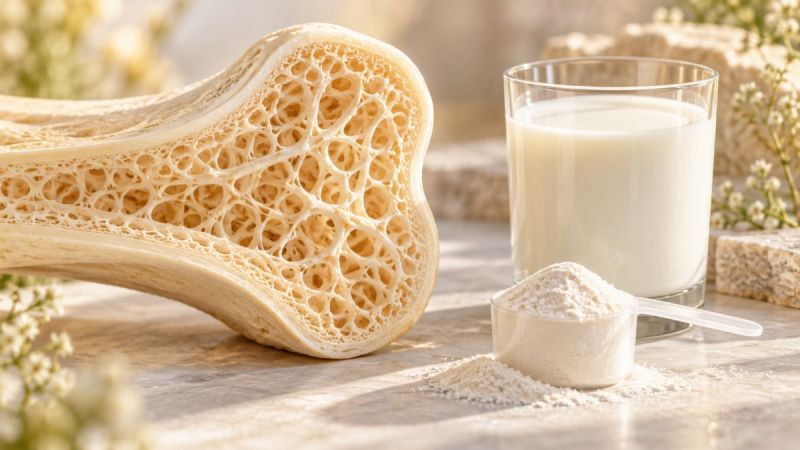
Bovine Collagen Peptides Explained: What They Are Made From, What the Trials Used, and How They Compare With Marine
Bovine collagen peptides: type I and III from cattle hide, 2 to 5 kDa, the form behind most skin, nail and joint trials. How made, safety, vs marine, labels.
Written by Dimitrun Irene. Updated October 27, 2026.
Bovine collagen peptides are short chains of amino acids made by breaking down the collagen in cattle hides, and occasionally bones, with heat and enzymes until the fragments are small enough to be absorbed intact from the gut. They are the most studied form of collagen supplement: the trials behind the skin, nail and joint claims used bovine or porcine type I hide peptides far more often than marine ones, and the typical 2.5 to 10 g daily dose comes from that research. What makes them bovine is the source, not the chemistry; the amino acid profile, roughly one third glycine, with high proline and hydroxyproline, is close to identical across mammals, and the differences from fish collagen are in peptide size and type rather than in what the body does with them.
This explainer covers what bovine collagen peptides are made from and how, which collagen types they contain and why that matters less than the label suggests, what the human trials actually used, how bovine compares with marine and porcine sources, the safety questions people ask about cattle products, and how to read a tub.
Bovine Collagen Peptides: The Short Answer
- 1What they are: hydrolyzed collagen from cattle, mostly hide, broken into peptides of about 2,000 to 5,000 daltons that dissolve in cold water and are absorbed in the small intestine.
- 2Collagen types: mainly type I with some type III, the same two types that make up skin, tendon, ligament and bone.
- 3Evidence: most of the randomized trials of collagen for skin elasticity, wrinkle depth, nail strength and joint pain used bovine or porcine type I peptides at 2.5 to 10 g a day for 8 to 24 weeks.
- 4Versus marine: same amino acids; marine peptides are often slightly smaller and from type I only; no trial has shown one source works better than the other at matched doses.
- 5Safety: hides carry negligible prion risk; the main concerns are beef allergy (rare), heavy-metal testing, and the fact that collagen is an incomplete protein with no tryptophan.
- 6Not suitable for vegetarians, or for kosher or halal diets unless certified; marine collagen is the usual alternative.
What Bovine Collagen Peptides Are Made From, and How
Collagen is the structural protein of connective tissue: a triple helix of three long amino-acid chains, each about a thousand residues, wound together into a rope that is strong, inert and, in its native form, indigestible. Cattle hides are about 90% collagen by dry weight, which is why they, rather than muscle or organ meat, are the raw material; bone and cartilage are used for some products. The hide is cleaned, de-haired and treated with acid or alkali to loosen the helix, then heated in water, which unwinds it into gelatin, the same substance as a jelly dessert. Gelatin is still a large protein that sets when it cools. To make peptides, manufacturers add proteases, enzymes that cut the chains at specific points, until the fragments average 2,000 to 5,000 daltons, roughly 20 to 50 amino acids long. At that size the powder no longer gels, dissolves in cold liquids and, importantly, is absorbed from the gut partly as intact dipeptides and tripeptides, which is what the research suggests signals the body's own collagen production. The difference between gelatin, collagen and peptides is spelled out in collagen vs collagen peptides.
Which Collagen Types Are in Bovine Peptides, and Does It Matter?
Of the 28 known collagen types, cattle hide supplies mostly type I (about 85 to 90%) with some type III. Type I is the collagen of skin, tendon, ligament, bone and the cornea; type III sits alongside it in skin, blood vessels and organs. Type II, the cartilage collagen, comes from cartilage and is sold separately, usually as undenatured type II or as bovine cartilage extract. Here is the part the marketing skips: once collagen is hydrolyzed into peptides, the type is largely a description of the source, not of what the product does. The peptides from type I and type III are chemically very similar, the body does not route them to matching tissues, and the trials that showed benefits for joints used type I peptides from hide, not type II. A multi-collagen product listing five types is mostly a blend of sources; the detail is in multi-collagen peptides types explained.
Collagen types by bovine tissue
Hide (skin)
I, some III
Most collagen peptide powders
Highest collagen yield; cheapest; lowest BSE risk
Bone
I
Bone broth protein, some peptides
Also supplies calcium and phosphorus; heavier metal testing matters
Cartilage (trachea, sternum)
II
Undenatured type II capsules; joint blends
Different product; typical dose 40 mg, not grams
Tendon
I
Rarely used commercially
The Amino Acid Profile
Bovine collagen peptides are about 90% protein by weight, and the protein has an unusual profile: roughly a third is glycine, and proline and hydroxyproline together make up another fifth. Hydroxyproline is almost unique to collagen, which is why its level in blood after a collagen drink is used in absorption studies. The profile is the same whether the cow was grass-fed or grain-fed, and nearly the same as porcine and fish collagen. What collagen lacks is tryptophan, which makes it an incomplete protein; it also has little of the leucine that triggers muscle protein synthesis. That is why collagen peptides are a poor substitute for whey if the goal is muscle, and why the body-composition trial that showed benefit combined 15 g of collagen with resistance training in older men. As a protein supplement for skin, nails and connective tissue the profile is exactly what those tissues are made of; as a meal replacement it is not. The grass-fed question, and what the label claim does and does not mean for the product, is in grass-fed collagen.
What the Human Trials Used
The question that matters for a buyer is not whether bovine collagen peptides are theoretically good but whether the trials that produced the numbers in advertisements used them. Largely, yes. The 2014 Proksch skin trials used 2.5 and 5 g of a specific type I collagen peptide from mammalian hide (the manufacturer supplies it from bovine and porcine sources) and found a 7% elasticity gain and a 20% reduction in eye-wrinkle volume at eight weeks. The 2017 Hexsel nail study used 2.5 g of the same hide-derived peptide for 24 weeks, with 12% faster growth and 42% fewer breaks. The 2008 Clark athlete study used 10 g of pharmaceutical-grade collagen hydrolysate from bovine or porcine hide for 24 weeks and found less joint pain. The 2015 Zdzieblik body-composition trial in older men used 15 g of hide-derived peptides with training. Marine collagen trials exist and show similar skin effects, but they are fewer and smaller. What this means is that the standard dose range, 2.5 g for skin and nails up to 10 g for joints, comes from mammalian hide peptides of the same type and size as bovine products, and a bovine peptide powder at those doses is the closest thing to what was tested. What those trials found, tissue by tissue and week by week, is in collagen before and after.
Key collagen peptide trials and their source
Proksch 2014 (skin elasticity)
Mammalian hide (bovine/porcine), type I
2.5 or 5 g, 8 weeks
Elasticity +7% vs placebo; largest effect over 50
Proksch 2014 (wrinkles)
Mammalian hide (bovine/porcine), type I
2.5 g, 8 weeks
Eye-wrinkle volume −20%; procollagen up
Hexsel 2017 (nails)
Mammalian hide (bovine/porcine), type I
2.5 g, 24 weeks
Growth +12%; breakage −42%
Clark 2008 (athlete joints)
Hide hydrolysate (bovine/porcine)
10 g, 24 weeks
Less joint pain at rest and activity
Zdzieblik 2015 (body composition)
Hide peptides (bovine/porcine)
15 g + training, 12 weeks
More fat-free mass, less fat than training alone
de Miranda 2021 (meta-analysis, 19 trials)
Mixed, mostly bovine and porcine
2.5 to 10 g, about 90 days
Hydration, elasticity, wrinkles improved
Bovine vs Marine vs Porcine
Collagen peptide sources compared
Source
Cattle hide, sometimes bone
Fish skin and scales
Pig skin
Collagen types
I and III
I
I and III
Typical peptide size
2,000 to 5,000 Da
Often smaller, 1,000 to 3,000 Da
2,000 to 5,000 Da
Absorption
Well absorbed; dipeptides detectable in blood within an hour
Slightly faster uptake in some studies; no proven outcome difference
Equivalent to bovine
Evidence base
Largest: skin, nails, joints, body composition
Growing: skin mainly
Several skin and joint trials; often grouped with bovine
Taste
Neutral to slightly beefy
Can be fishy unless well processed
Neutral
Price
Lowest
Highest
Low
Dietary
Not vegetarian; kosher or halal only if certified
Pescatarian-friendly; usually kosher-acceptable
Not kosher or halal
Allergy
Beef allergy (rare; alpha-gal syndrome)
Fish allergy (more common)
Pork allergy (rare)
No head-to-head trial has shown marine collagen outperforming bovine at the same dose; the differences that exist are in sourcing, price, taste and dietary acceptability. The full argument is in marine vs bovine collagen peptides.
Is Bovine Collagen Safe? BSE, Allergy and Testing
The question people ask most is about mad cow disease. Bovine spongiform encephalopathy is caused by prions that concentrate in brain, spinal cord and nervous tissue; hide and skin carry negligible infectivity, which is why regulators in the US and EU classify hide-derived gelatin and collagen as safe when sourced from inspected animals and processed with the standard acid, alkali and heat steps, which further reduce any prion activity. Products made from bone are subject to the same sourcing rules, with vertebrae excluded. No case of transmission through collagen supplements has been recorded. The more practical safety points are these: collagen is a cattle product and can trigger reactions in people with beef allergy, including alpha-gal syndrome from tick bites; bone-derived products should carry third-party testing for lead, cadmium and other heavy metals, because bone concentrates them; and at doses above 15 g a day some people get bloating, fullness or loose stools. People with kidney disease on a protein restriction should count collagen as protein. Side effects in detail are on our collagen side effects page.
How to Read a Bovine Collagen Label
- 1Hydrolyzed collagen, collagen peptides or collagen hydrolysate: all mean the same thing. Gelatin is not hydrolyzed and will gel.
- 2Source: look for hide or skin rather than unspecified; bone-derived products should show heavy-metal testing.
- 3Types I and III: correct for hide. A product claiming five types from hide alone is mislabelled.
- 4Dose per scoop: 10 g is standard; the skin and nail trials used 2.5 to 5 g, joint trials 5 to 10 g.
- 5Third-party testing: NSF, Informed Choice or USP marks matter more than grass-fed claims.
- 6Vitamin C: not required in the product; your own intake matters, since collagen synthesis needs it.
- 7Avoid: proprietary blends that hide the collagen dose, added sugars in flavoured versions, and claims of specific tissue targeting.
A fuller buying checklist, without product recommendations, is in how to choose collagen peptides, and the general background on what peptides are is in what are collagen peptides.
Who Should Choose Bovine, and Who Should Not
Bovine collagen peptides are the default choice for most people: the best evidence, the lowest price, a neutral taste and a dose range that matches the trials. The exceptions are people who do not eat beef for religious reasons unless the product is certified, people with beef or alpha-gal allergy, pescatarians, and anyone who simply dislikes the faint taste, for whom marine collagen is the equivalent. Vegetarians and vegans have no collagen option; so-called vegan collagen products contain amino acids or collagen-boosting nutrients, not collagen. Whatever the source, the trial doses, 2.5 to 10 g daily for at least 8 to 12 weeks, are what produced results; how to fit that into a day is in how to take collagen peptides and the exercise-specific protocol in collagen peptides for joints and exercise.
When to Talk to Your Doctor
- 1If you have kidney disease or are on a protein-restricted diet
- 2If you have a beef allergy, alpha-gal syndrome, or unexplained reactions to red meat
- 3If you take warfarin or other medicines where a change in protein intake could matter
- 4If you are pregnant or breastfeeding; collagen is food-derived but supplement testing is limited
- 5If joint, skin or nail symptoms are new, severe or one-sided; those are not supplement questions
The Bottom Line
Bovine collagen peptides are hydrolyzed type I and III collagen from cattle hide, cut into small chains that dissolve and absorb, with an amino-acid profile built for skin, nails and connective tissue and lacking what muscle needs. They are the form most human trials tested, which is why the doses on the tub are what they are. Marine collagen is the equivalent for people who avoid beef; neither has been shown to beat the other. Buy hide-sourced, third-party tested, 10 g scoops, take 2.5 to 10 g daily for at least three months, and judge the result the way the trials did rather than by a photo.
FAQ
Short chains of amino acids made by breaking down collagen from cattle hide (and sometimes bone) with heat and enzymes. They contain mainly type I and III collagen, dissolve in cold water, and are the form used in most human trials of collagen supplements.
Neither has been shown to work better at matched doses. Bovine has the larger evidence base and lower price; marine suits people who avoid beef and is often slightly smaller in peptide size. The amino acids are nearly identical.
In randomized trials, bovine collagen peptides improved skin elasticity and hydration at 8 to 12 weeks, nail growth and strength at 24 weeks, and activity-related joint pain at 12 to 24 weeks. Combined with resistance training, 15 g daily improved body composition in older men.
Yes. Prions concentrate in nervous tissue, not hide, and hide-derived collagen from inspected cattle processed with acid, alkali and heat is classified as safe by US and EU regulators. No transmission through collagen supplements has ever been recorded.
Not when made from hide, which supplies types I and III. Type II comes from cartilage and is sold separately, usually in milligram doses as undenatured type II. Products listing many types from hide alone are mislabelled.
The trials used 2.5 to 5 g daily for skin and nails and 5 to 10 g for joints, for at least 8 to 24 weeks. A standard 10 g scoop covers all of those. More than 15 g a day adds little and may cause bloating.
Sources
- 1Proksch E et al. Oral supplementation of specific collagen peptides has beneficial effects on human skin physiology, Skin Pharmacology and Physiology, 2014
- 2Hexsel D et al. Oral supplementation with specific bioactive collagen peptides improves nail growth and reduces symptoms of brittle nails, Journal of Cosmetic Dermatology, 2017
- 3Clark KL et al. 24-week study on the use of collagen hydrolysate as a dietary supplement in athletes with activity-related joint pain, Current Medical Research and Opinion, 2008
- 4Zdzieblik D et al. Collagen peptide supplementation in combination with resistance training improves body composition in elderly sarcopenic men, British Journal of Nutrition, 2015
- 5de Miranda RB et al. Effects of hydrolyzed collagen supplementation on skin aging: a systematic review and meta-analysis, International Journal of Dermatology, 2021
- 6León-López A et al. Hydrolyzed collagen: sources and applications, Molecules, 2019
- 7Bovine spongiform encephalopathy (BSE) questions and answers, U.S. Food and Drug Administration
Collagen peptides are a dietary supplement, not a medicine. This article summarizes published research for general information and does not recommend products.

Dimitrun Irene
Author
Comments (0)
Be the first to comment on this article.
More articles